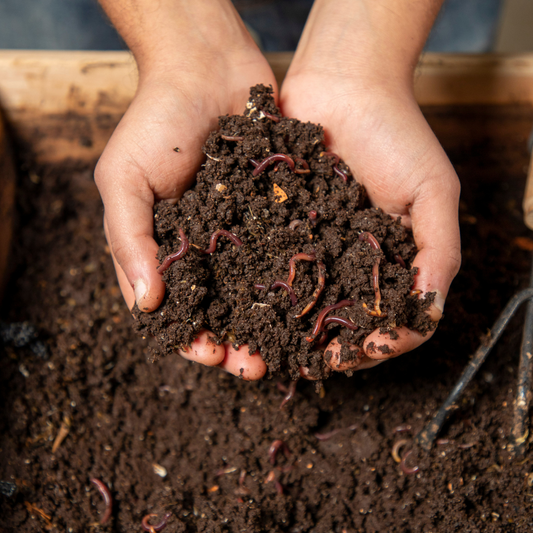
It Recycles 70% Of Your Trash

Using Earthworms, Nature's Recyclers
Did you know that composting earthworms can turn food scraps into rich soil in just 30 days? They live inside the box, and eat all the time, never escaping their tiny home.

Wooden Box Smells Like Camping
The box is made from white cedar, which absorbs any bad smells. Customers actually love the smell of their compost box!
It's hard to believe composting can actually smell so nice.
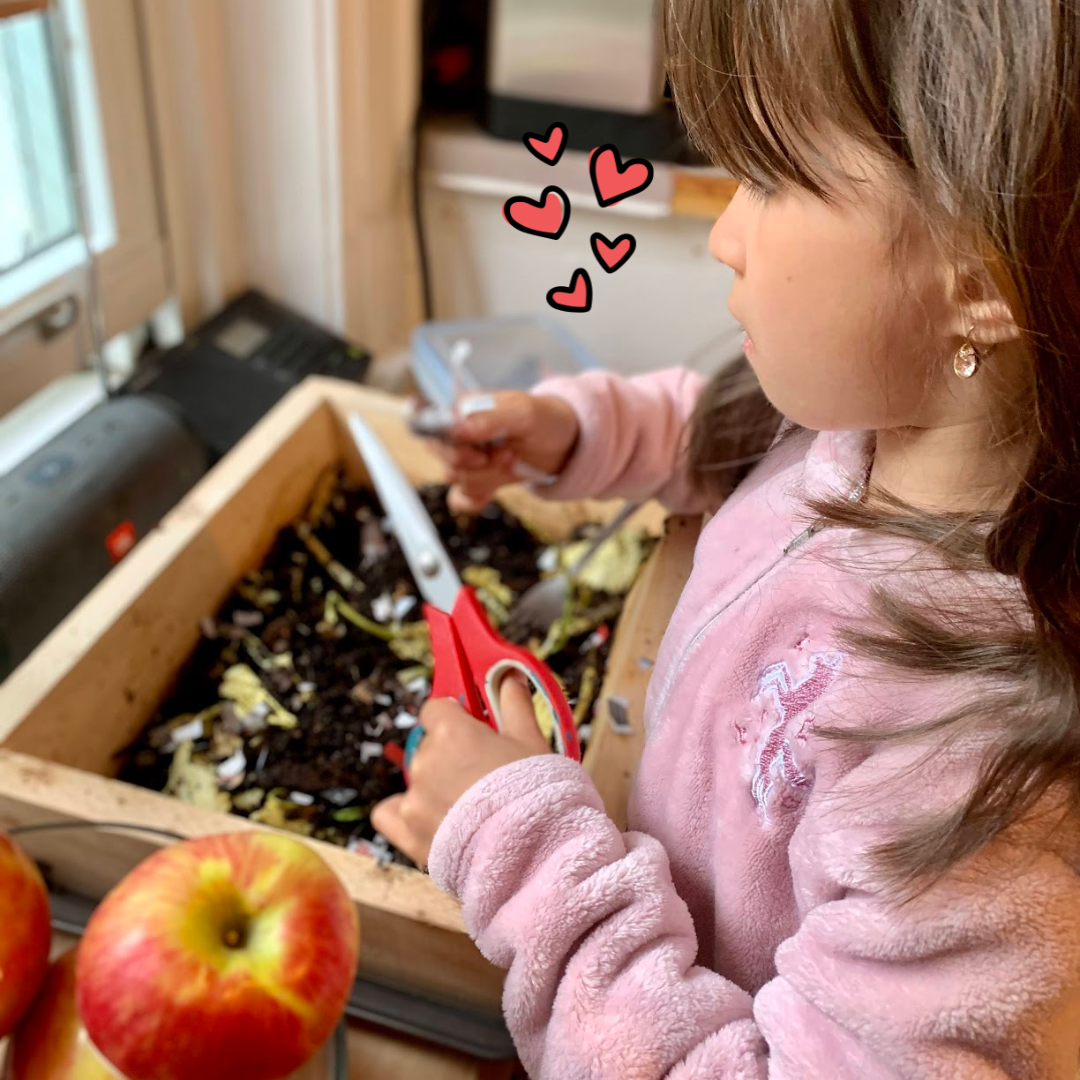
Compost Fruit, Veggies & Paper
You can feed the worms fruit peels, veggie scraps, coffee grinds, tea leaves, egg shells.
Avoid cooked foods, meat and dairy.
You will also need to add fibrous bedding - paper towels, cardboard, egg cartons etc.
Why It Works So Well


3 Step Process


Ideal for 2-3 People
The Worm Studio can compost 6 litres of scraps a week.
You can harvest a bucket of finished castings from the bottom level every 3 months.
Measures 45 cm long, 34 cm wide, and 26 cm tall.

Comparing The Choices
There's no right or wrong way to compost - the Worm Studio is just better. Easy to use, won't break, and doesn't cost anything to run.
Our customer support will help you at every step - you're not doing this alone with random internet advice.
-

Amazing Plant Fertilizer
-

Activity For Children
-

Earth Friendly Habit


We Provide The Tools To Succeed
A box includes a worm parenting guide to answer all your questions like what to feed, how to feed, when to feed, and how to monitor the ecosystem for success. We have an online community for support and motivation.
Our packing material becomes the initial bedding for you to use. You only need red wiggler worms to start.

Grow Your Best Plants
The end product, worm castings, is Nature's best fertilizer - fluffy, nutrient rich and full of healthy microbes. You have to try it to believe it!

Choose How You'll Start
-
Junior Scientist Bundle
Regular price $180 CADRegular price$210 CADSale price $180 CADSale -
Composting Essentials Bundle - Worm Studio and Worms
Regular price From $252 CADRegular price$335 CADSale price From $252 CADSale -
The DIY bundle - Woodworking plans, starter worm mix and worms tshirt
Regular price $90 CADRegular price$120 CADSale price $90 CADSale -
Ultimate Bundle - Worm Studio, 2x Worm Mix, Scrap Collector and Tee
Regular price From $323 CADRegular price$430 CADSale price From $323 CADSale